Ekkamai and Phra Khanong: Bangkok’s eastward story
A bus terminal points toward the sea. A planetarium points toward the stars. A canal carries one of Thailand’s most enduring ghost stories. Few parts of Bangkok hold so many directions at once.
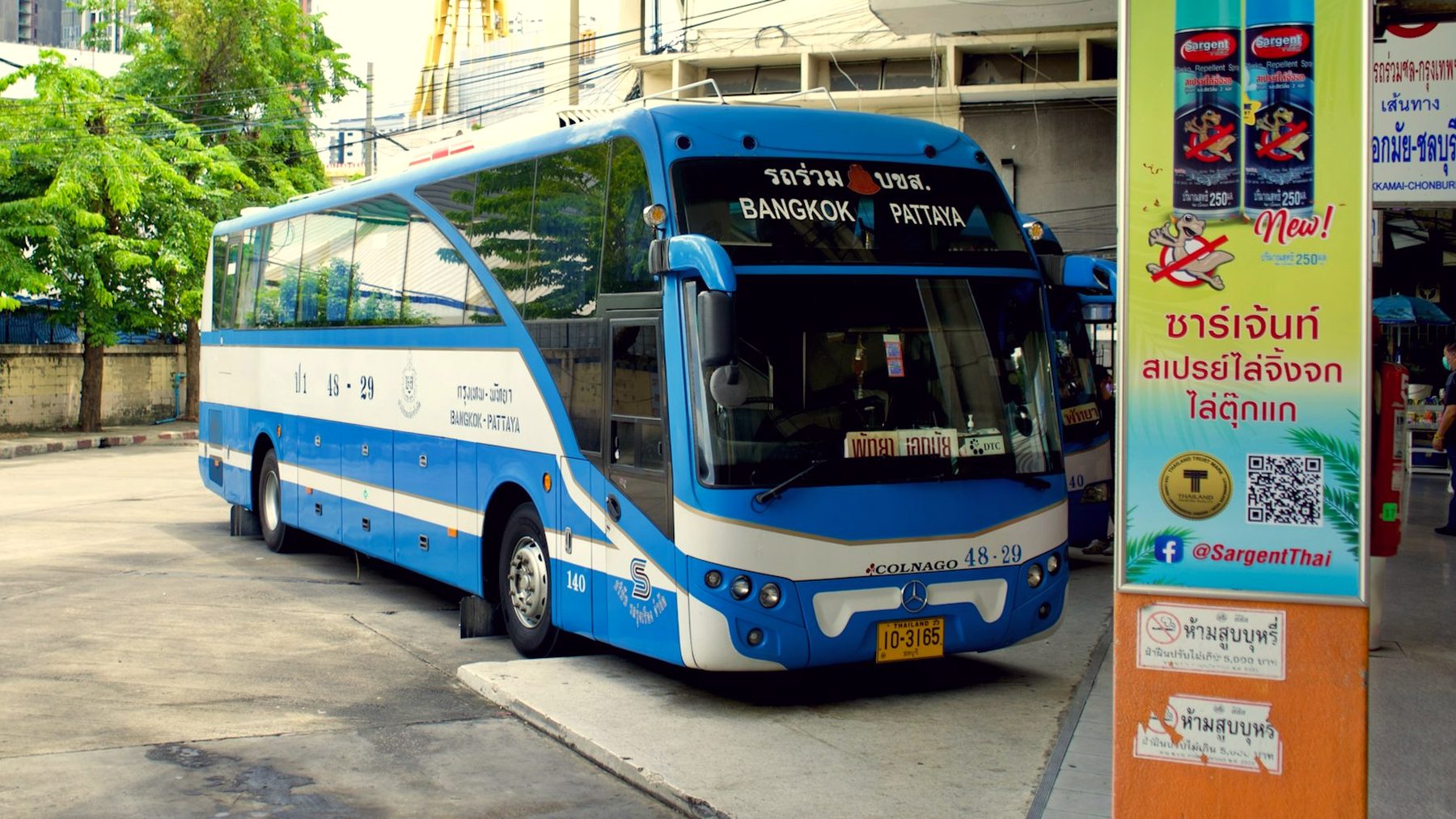
Ekkamai: where Bangkok starts heading east. · Photo: thaimaaopas / Unsplash
Ekkamai is often introduced as Thonglor’s quieter neighbor: less polished, less obvious, perhaps a little easier to breathe in. That is not wrong, but it misses the more interesting story.
Ekkamai has always been a place of movement. It sits on Sukhumvit’s eastward line, where Bangkok begins to feel less like a closed metropolis and more like a starting point. Here, travelers leave for the eastern provinces; schoolchildren have looked up at artificial night skies for generations; and just beyond modern Sukhumvit, the old canal world of Phra Khanong keeps a legend alive. To understand Ekkamai, look in three directions: east, up and back.
The city that leads somewhere else
The Eastern Bus Terminal is one of Ekkamai’s least glamorous landmarks — and one of its most revealing. It doesn’t try to be iconic: ticket counters, luggage, plastic chairs, departures, and people carrying more than they need for a short trip. But its position on Sukhumvit Road tells a larger story. From here, buses link Bangkok with Thailand’s eastern provinces, turning Ekkamai into a threshold between the capital and the coast.
Much of central Bangkok is built to make you stay: hotels, malls, rooftop bars and train stations designed for constant circulation within the city. Ekkamai suggests something else. It reminds you that Bangkok is connected to a wider country — industrial towns, beach cities, fruit-growing provinces and family homes beyond the skyline.
The neighborhood has changed around the terminal. Condominiums have risen, cafés have replaced workshops, and nightlife has found its own corners. Yet the terminal remains a stubbornly useful piece of the old city: an address that exists because Bangkok is not the end of the journey.
Looking up in Ekkamai
Next door, the Bangkok Planetarium offers a different kind of escape. It opened in 1964, when Thailand was investing in science education and Bangkok was growing rapidly beyond its historic core. Its appeal is human rather than grand: a place built for generations of schoolchildren to sit in the dark and be shown a sky larger than the one above the city.
The planetarium and the bus terminal stand almost side by side, but they represent two versions of possibility. Together, they give the area a quality newer parts of Sukhumvit sometimes lack: a sense that the city is still curious about what lies beyond itself. Ekkamai’s more recent reputation — design stores, restaurants, late-night bars, residential towers — has grown around this older framework. The trendier layer is real, but it is not the foundation.
One sends people outward through Thailand. The other sends them outward through imagination.
Follow the canal, not the skyline
To find the deeper history of this side of Bangkok, leave the main road. Sukhumvit makes the city look vertical: stations, towers, traffic and glass. Phra Khanong asks you to read it differently. Here, the canal matters. Before roads and rail lines dominated daily life, waterways carried travel, trade, news and neighborhood life, connecting communities that now seem separated by expressways and apartment blocks.
The legend of Mae Nak Phra Khanong
The canal is also the setting for Mae Nak Phra Khanong, one of Thailand’s most famous folk stories. The outline is familiar to most Thais. Nak, a young woman from Phra Khanong, dies in childbirth while her husband Mak is away at war. When he returns, he doesn’t realize that the wife waiting for him is a spirit. Depending on who tells it, the story shifts between love story, tragedy, horror and comedy — and that flexibility is part of its power.
The earliest written versions appeared in the late nineteenth century, but the legend has never belonged to a single text. It has moved through oral storytelling, theater, film, television and popular culture for more than a century. Every retelling reveals something about the Thailand of its moment: ideas of family, grief, loyalty, fear and the relationship between Buddhism and the spirit world.
Mae Nak is more than a ghost story
It is easy for visitors to treat Mae Nak as Bangkok’s spooky attraction. That misses the point. At Wat Mahabut, where the Mae Nak shrine stands near the Phra Khanong canal, people still come to pray — often for love, commitment and family. The shrine is not a stage set for a legend. It is a place of living belief, where the story plays a role in people’s real emotional lives.
This is one of the great differences between reading about Bangkok and being in it. The city’s legends aren’t stored safely in museums. They sit beside markets, temples, traffic and apartment blocks — a film reference for one person, a childhood story for another, a sacred place for someone else. Ekkamai looks ahead: transport, science, new buildings. Phra Khanong looks back: canals, memory, temple life and the stories that survived the city’s expansion.
Not a quieter Thonglor
Calling Ekkamai “quieter Thonglor” is convenient, but it isn’t enough. Thonglor has become shorthand for a certain Bangkok: polished bars, design-led nightlife and a city performing its confidence. Ekkamai shares some of that energy after dark, but its character is less settled. It still feels like a place where different Bangkoks overlap: long-term residents and new arrivals, bus travelers with backpacks and office workers with laptops, narrow lanes where a neighborhood meal still matters more than the next opening party.
Walk it with the question of what the area connects rather than what it contains. It connects Bangkok to the east. It connects new Sukhumvit to the canal city beneath it. And through the Mae Nak legend, it connects a modern capital to a story that has outlived nearly every version of the city around it.
FAQ
Ekkamai is home to the Eastern Bus Terminal, a long-standing departure point for routes from Bangkok to Thailand’s eastern provinces. It gives the neighborhood a practical connection to the coast and the wider region.