The Face of Silom: Patpong beyond the night market
A banana plantation, a Hainanese fortune, a private road and a Cold War bar. Bangkok’s most notorious lanes have a far stranger history than their reputation.
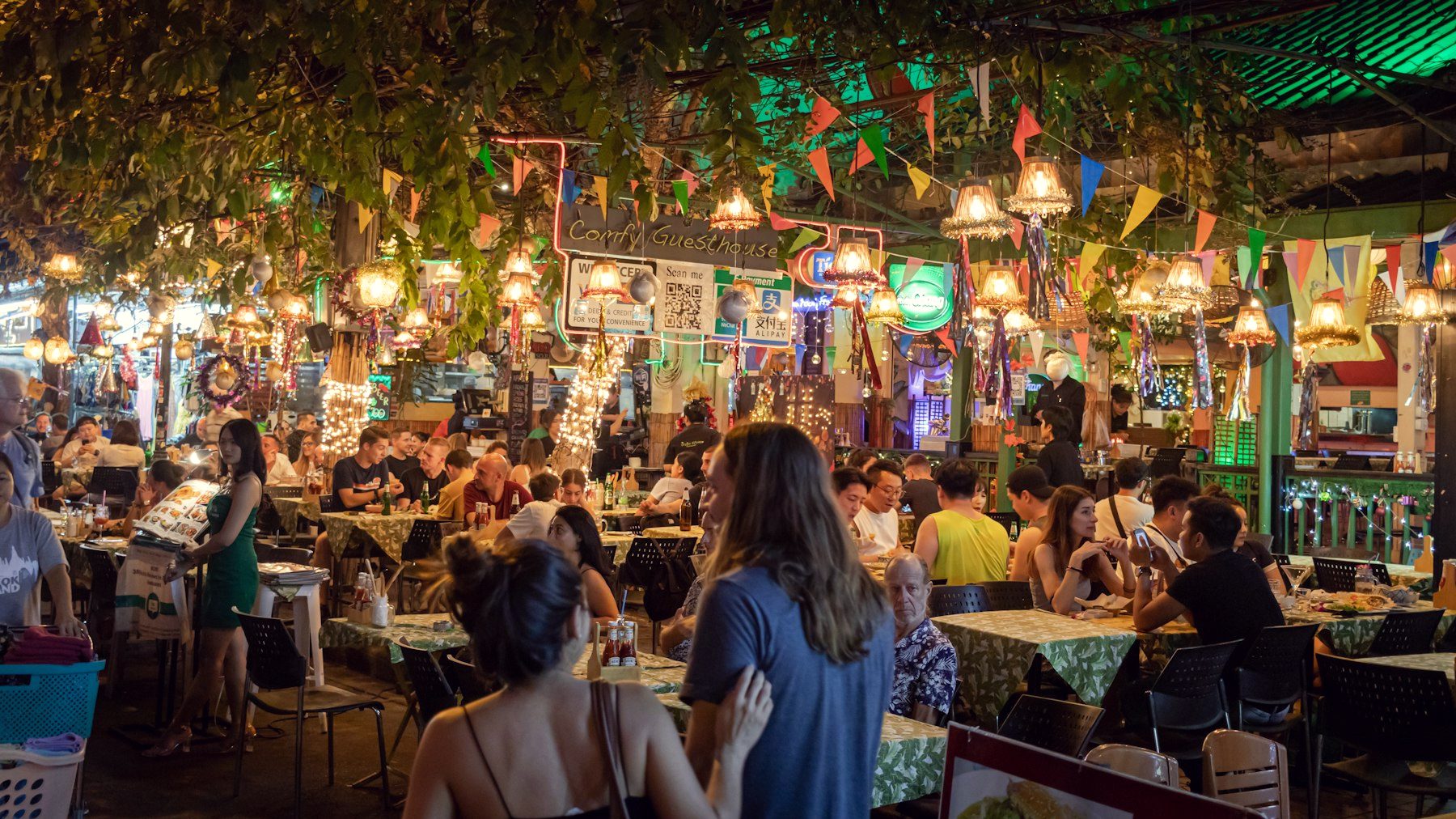
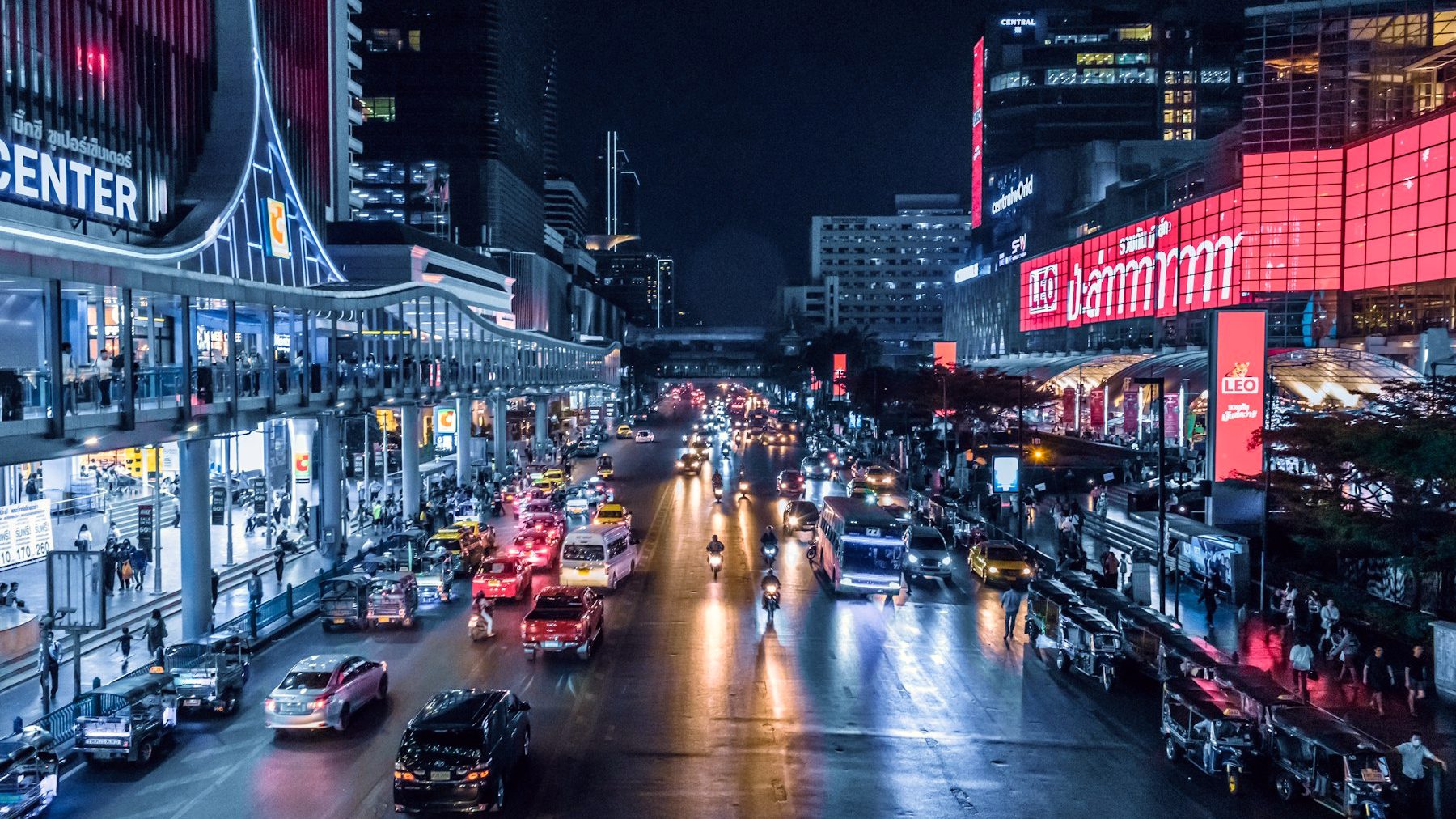
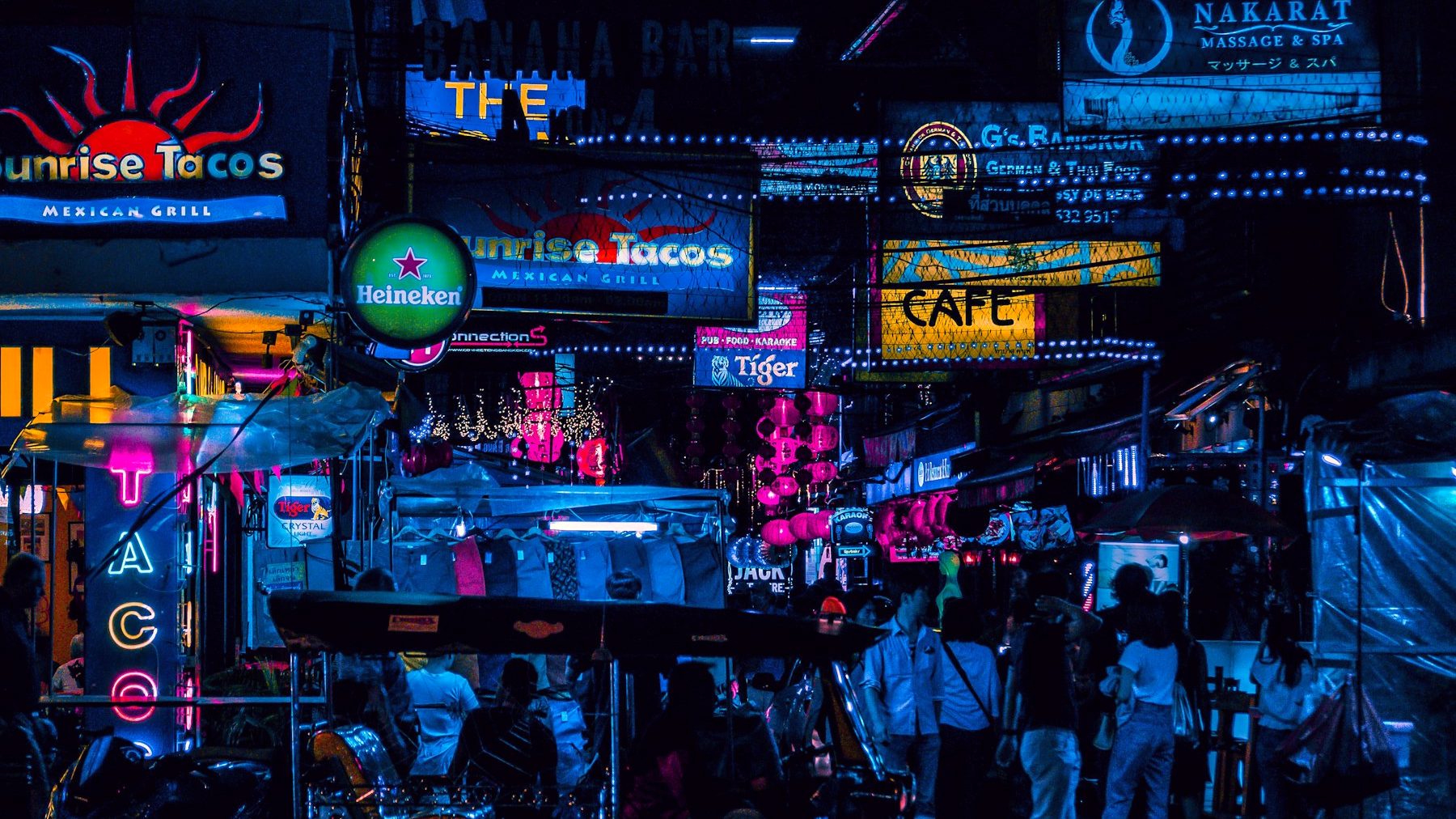
Bangkok after dark, where the night markets fill up. · Photo: syedabsarahmad / Unsplash
Most people know Patpong as two lanes of neon and a night market between Silom and Surawong Road. Fewer know that it was a banana plantation within living memory, that it carries the name of a Hainanese immigrant family, and that its two main lanes are still private roads. Patpong’s reputation is famous. Its history is better.
A banana plantation and a Hainanese fortune
The story starts with Tun Poon, born on Hainan Island in 1881, whose family brought him to Siam as a boy. Like many Chinese immigrants of his generation, he began in the rice trade, then expanded into mills and, crucially, into supplying raw material to the young Siam Cement company. His work and philanthropy earned him a royal title from King Prajadhipok, Rama VII: Luang Patpongpanich. The family took the name with them.
In 1946, just after the Second World War, Luang Patpongpanich bought a plot of land between the Silom canal and Surawong Road. It was then on the edge of the city — a banana plantation with a teak house on it, which became the family home.
From family land to Bangkok’s first nightlife strip
It was the eldest son, Udom, who saw something else in the land. Educated abroad and exposed to the West, he built a road through the plot — today’s Patpong 1 — and lined it with shophouses to rent out. A second lane, Patpong 2, came later. Both are still private property owned by the family, not city streets.
The timing mattered. Postwar Bangkok was filling up with foreign companies, airlines and diplomats, and Silom was becoming the city’s business district. Offices moved into Patpong’s new buildings, and bars and restaurants followed the people who worked in them. By the Vietnam War era, the lanes had become a nightlife district for soldiers on leave, expats and travelers, and the reputation that still clings to the name took shape.
Patpong’s reputation is famous. Its history is better.
Spies, airlines and the Madrid Bar
Part of Patpong’s legend is geopolitical. During the Cold War, the lanes sat close to the offices of airlines and agencies tied to America’s covert operations in Indochina, and local lore puts CIA offices in the floors above the old Madrid Bar on Patpong 1. How much of it is fact and how much is barroom storytelling depends on who is telling it — which is very Patpong.
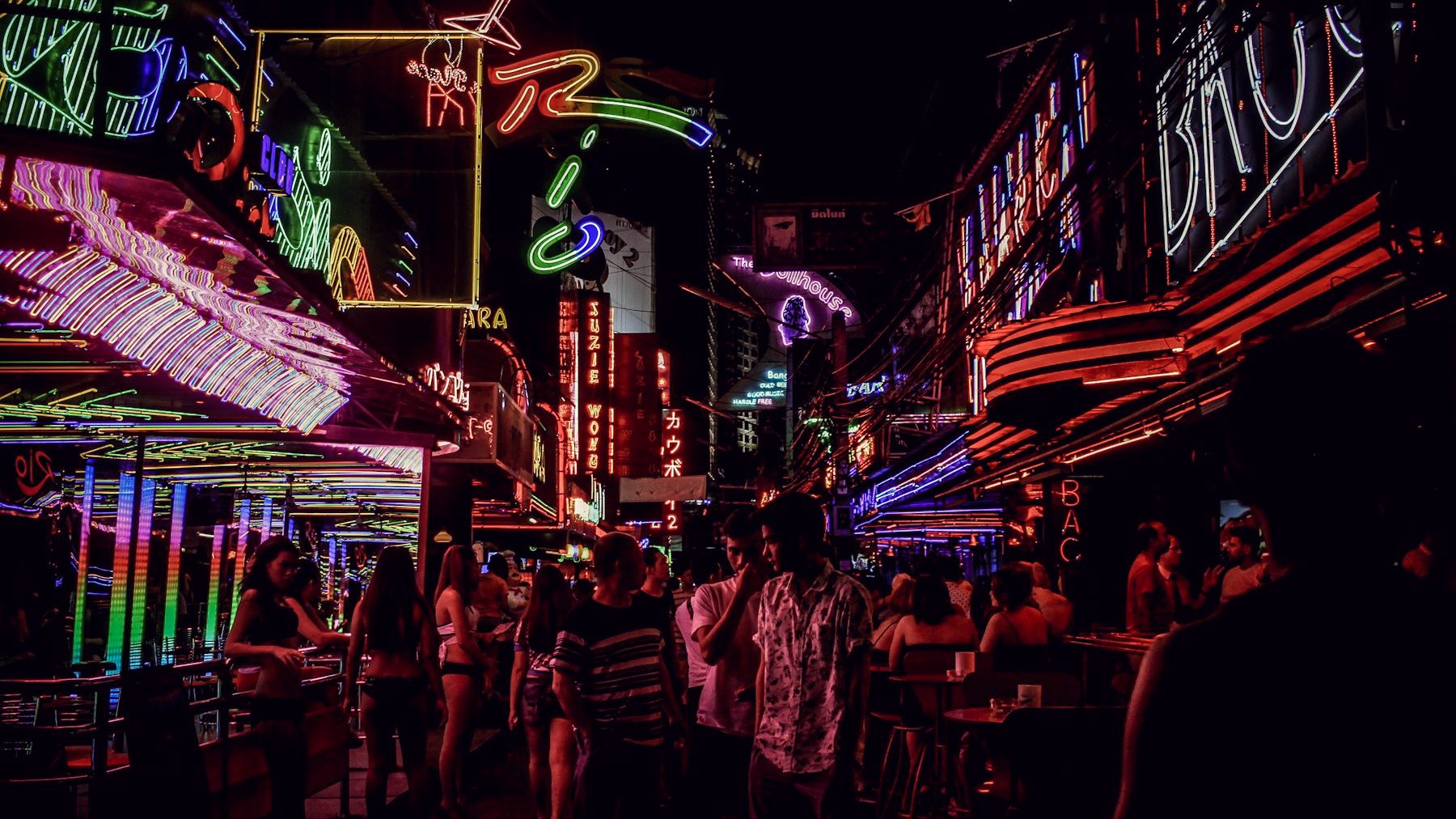
In the early 1990s the family turned the sidewalks of Patpong 1 into a night market, renting space to vendors. That market is what most visitors see today: counterfeit watches, T-shirts and souvenirs under the neon, with the bars behind the stalls.
The museum that tells the whole story
In 2019 the Patpong Museum opened on Patpong Soi 2, covering roughly seventy years of the area’s history: the Patpongpanich family, the Cold War years, the famous visitors and, yes, the adult entertainment the lanes are known for. It is the single best way to understand the district without pretending it is something it isn’t — and a far more interesting hour than the night market.
Silom beyond Patpong
Patpong is a small rectangle inside a much bigger district. By day, Silom is Bangkok’s Wall Street: bank towers, office crowds, and street food carts that feed them at lunch. Lumphini Park, the city’s great green lung, sits at its eastern end, where joggers and tai chi groups take over early in the morning. Neighboring Soi Thaniya has its own hostess bars catering mostly to Japanese businessmen, and the lanes around Silom Soi 2 and 4 have long been the heart of Bangkok’s gay nightlife.
That mix is what makes the district a face of Bangkok in its own right: money and nightlife, office towers and private lanes, all within a few minutes of Sala Daeng station.
FAQ
The area is named after the Patpongpanich family, Hainanese immigrants who bought the land in 1946. The family still owns Patpong 1 and Patpong 2, which are private roads.